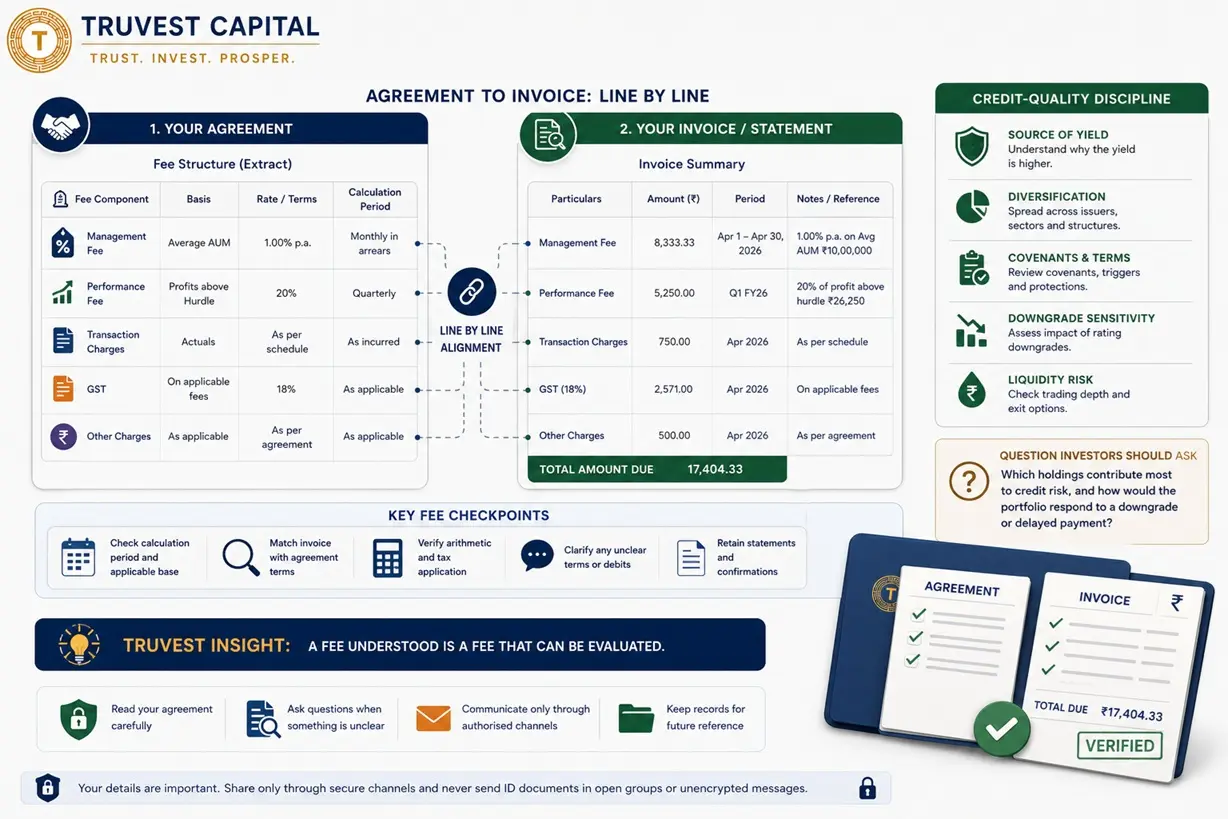
Mutual Fund: Reconcile PMS Fees With the Agreed Method
Fee structures can include fixed, performance-linked or other permitted components. Investors should compare invoices and statements with the agreement, including the calculation period, applicable base and taxes. Raise a query when terminology or arithmetic is unclear rather than assuming every debit is self-explanatory.
Institutional strategy insight
Credit-quality discipline. A debt portfolio can earn additional yield by accepting issuer risk, liquidity risk or structural complexity. Professional evaluation examines the source of yield, diversification, covenants and downgrade sensitivity rather than assuming every income stream has the same quality.
Where this approach may be most useful
This strategy may be relevant when capital stability and income objectives are defined precisely enough to judge whether extra credit risk is justified. That describes a possible portfolio use, not a recommendation or an assurance of outcome. The final decision must follow the official documents, current facts, risk capacity, liquidity needs and an appropriate suitability assessment.
A question informed investors should ask
Which holdings contribute most to credit risk, and how would the portfolio respond to a downgrade or delayed payment?
Truvest Insight: A fee understood is a fee that can be evaluated.